Shifted Schedule? How to Use Guided Sleep Audio When Bedtime Changes
A shifted schedule can make bedtime feel weirdly high-stakes. You miss your usual window, glance at the clock, and suddenly your brain acts like you’ve broken some sacred rule. That’s usually the moment sleep gets harder. If your bedtime keeps moving because of work, travel, parenting, or plain life chaos, guided sleep audio works best when you stop expecting it to recreate your perfect old routine on demand. Its real job is simpler: give your nervous system a familiar runway, even when the clock says something different.
That matters because changing bedtime often triggers anxiety and routine problems more than actual insomnia. Your body may be tired, but your mind is still arguing with the schedule. Guided sleep audio helps by narrowing your attention. Instead of tracking time, replaying the day, or worrying about how tomorrow will go, you’re following one voice, one soundscape, one gentle sequence. Think of it less as a magic sedative and more as a bridge between “I’m still switched on” and “I’m allowed to power down now.”
Use the Same Audio Cue, Even When the Hour Changes
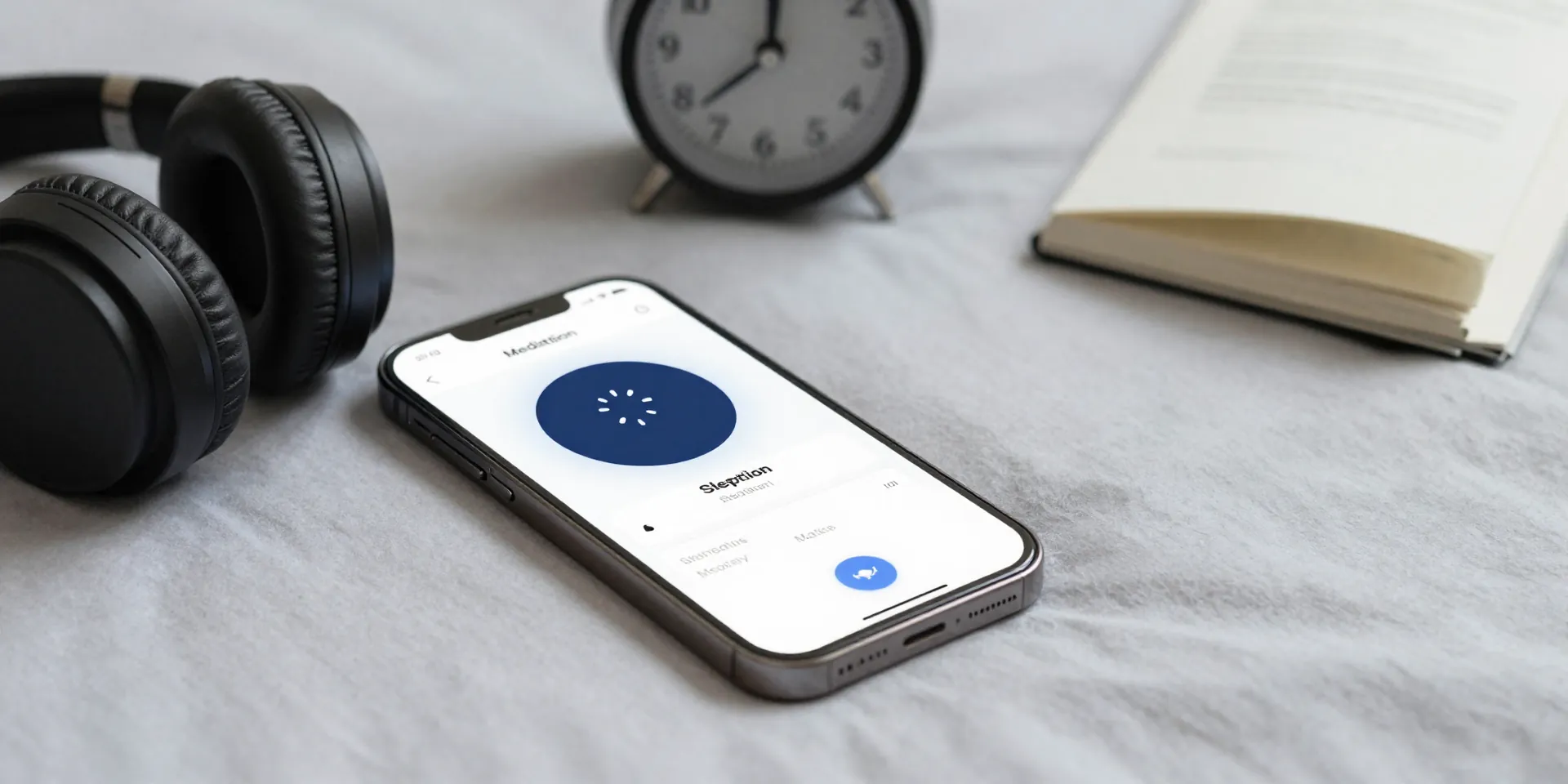
When your schedule shifts, consistency matters more than timing. That’s the piece people miss. They think a routine only counts if it happens at the same hour every night. Not true. Your brain also learns through sequence. If you always dim the room, put your phone on do not disturb, press play on the same guided sleep audio, and lie down in the same position, you’re building a recognizable pattern. The clock can move. The cue stack stays familiar.
Try using one primary track for “this is bedtime now,” especially during a rough patch of changing bedtime. Not five different apps, not random videos, not a new voice every night because you got bored. Pick one style and stick with it for a week or two. A calm narrator, slow pacing, no sharp volume changes, and a track length that fits your reality. If you usually fall asleep in twenty minutes, don’t choose a ninety-minute story with dramatic background music. You want something predictable enough that your body starts to associate it with release, not entertainment.
Match the Audio to Your Stress Level, Not to What Sounds Trendy
Not all guided sleep audio is useful for all kinds of tired. If you’re physically exhausted but mentally quiet, a simple ambient track or soft body scan may be enough. But if you’re dealing with work stress, anticipatory dread, or that jumpy feeling that comes with anxiety and routine disruptions, you’ll probably do better with more structure. A guided track that gives your mind small jobs helps a lot: notice your breathing, unclench your jaw, relax your shoulders, follow a count, imagine a safe place. Specific cues keep your thoughts from sprinting off.
On the other hand, if your brain is overstimulated by too much language, a sparse narration with long pauses may work better than a chatty sleep story. Be honest about what usually keeps you awake. Is it rumination? Choose a track with guided attention. Is it physical tension? Go for progressive muscle relaxation. Is it dread around not sleeping? A track that explicitly normalizes wakefulness can take the pressure off. The best choice isn’t the most beautiful voice or the most popular app. It’s the one that interrupts your personal spiral without asking you to try too hard.
Build a Short Pre-Sleep Buffer When Bedtime Moves Around
If you go straight from work mode to bed, guided sleep audio has to do too much heavy lifting. Give it a little help. You don’t need a luxurious evening routine with candles, supplements, and a journal you’ll forget after three days. You need a short buffer that tells your brain the day is over, even if “evening” happens at midnight, 4 a.m., or after a split shift.
Keep it lean. Ten to twenty minutes is enough. Lower the lights. Stop problem-solving. Wash your face or take a quick shower if that helps you reset. Eat something light if hunger is keeping you alert, but skip the giant meal right before lying down. Then press play on your guided sleep audio before you feel desperate. That timing matters. If you wait until you’re already frustrated, the audio can start to feel like a rescue mission. Better to begin when you’re winding down, not when you’re mentally bargaining with the ceiling. A small repeatable buffer makes changing bedtime less jarring because the body learns, “When these few things happen, sleep is next.”
Handle the Nights When the Audio Doesn’t Knock You Out
Sometimes the track ends and you’re still awake. Annoying, yes. But it doesn’t mean the method failed. A lot of people turn guided sleep audio into a performance test: if I’m not asleep by minute twelve, something is wrong. That kind of monitoring feeds anxiety and routine issues fast. The better frame is this: the audio is helping you reduce activation, not guaranteeing instant unconsciousness. Resting quietly with less mental noise is still useful. It counts.
Have a plan for those nights so you don’t improvise badly. You can replay the same track once if it’s genuinely soothing. Or switch to a lower-engagement option like rain, brown noise, or a shorter breath cue. What you don’t want is to sit up, start scrolling, and flood your brain with light, news, messages, or work thoughts. If irritation is building, keep your eyes off the clock. The clock turns a normal sleepy delay into a math problem. And nobody relaxes by doing sleep math at 2:17 a.m. or 9:40 a.m. after a night shift.
Make Your Routine Flexible Enough to Survive Real Life
The strongest routine is not the fanciest one. It’s the one you can repeat when life gets messy. If your work hours rotate, your bedtime may never be perfectly stable, and that’s fine. What can stay stable is your sleep environment and your cues. Keep a few anchors ready: the same guided sleep audio, a sleep mask if daylight is an issue, headphones or a speaker that won’t irritate you, cool room temperature, and one clear boundary around work contact. Those basics travel well across a shifted schedule.
Also, give yourself permission to adjust the routine without starting over every time. If you only have eight minutes, do an eight-minute track. If your partner is awake, use earbuds. If you’re sleeping during the day, make the room darker and start the audio earlier to block outside noise before it pulls you back into alertness. Routine should support reality, not fight it. The goal isn’t to become someone who sleeps at the exact same hour forever. It’s to have a reliable off-switch you can use when life moves the bedtime target again.