How Much Water Is Too Much on the Wheel? A Beginner Guide
You've seen the videos. Calm hands. Spinning clay. A serene puddle shimmering like a mountain lake. Looks peaceful, right? Wrong. That's a trap. Most beginners treat the wheel like a water park and then wonder why their cylinder flops like a tired pancake. Here's the thing: clay needs water to move, but it doesn't need a bath. Too much throwing water turns your sturdy lump into a slippery mess with zero backbone. You're not lubricating at that point. You're excavating.
The Tell-Tale Sag Before the Fall
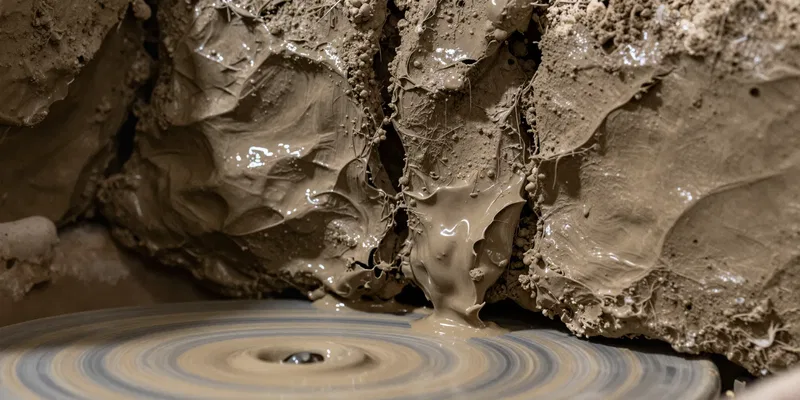
Clay collapse doesn't announce itself with a trumpet. It whispers. First, your walls get wobbly. Then the base starts looking like a melted candle. If you see a reflective pool gathering inside your pot like a tiny crater lake, you've already gone too far. The clay gets slick. Too slick. Your fingers skate around instead of gripping. That's not skill. That's hydroplaning. And once the structure gives up, no amount of wishing will pump the walls back up.
A Palmful Is Plenty
So how much is enough? Picture a small splash in your palm. Not a handful. Not a bucket. Just enough to keep your fingers from dragging. Pottery water control isn't about generosity; it's about restraint. Dip, touch, shape. Repeat. If water is cascading off the wheel head and onto your jeans, you're doing it wrong. The clay should feel slightly tacky, like a damp sidewalk after light rain. Not submerged. Not drenched.
Sponges Lie. Ribs Don't.
Beginners love sponges. They squeeze them directly over the clay like they're watering a houseplant. Stop that. Use the sponge to soak up excess slip, not to donate more liquid to the cause. This is one of those beginner wheel tips that separates the hobbyists from the folks who actually make pots. Get a rib. Metal or wood, doesn't matter. It smooths walls without adding a drop. Less water, more pressure. That's the trade.
When You've Already Gone Too Far
Maybe you ignored every instinct and flooded it anyway. It happens. Don't sit there trying to throw a puddle into a cylinder. You can't. Scrape the mess off, wedge it back into a ball, and let it sit until it firms up. Clay has memory, but it also has limits. If it's soupy at the base, it's done. Walk away. Grab some coffee. Come back when the clay remembers it's supposed to be solid. Patience beats panic every single time.